PLACE
Places are never neutral.
Every city develops its own rhythm through geography, memory, architecture, climate, material culture, and patterns of movement.
SOGHA begins by reading these conditions closely, treating them as part of the cultural structure of a place and as sources from which visual form can be developed.
INTERPRETATION
SOGHA approaches heritage through spatial experience, material culture, and collective memory.
The process begins with observation: scale, texture, light, construction, landscape, architectural rhythm, and the ways people inhabit and move through a setting.
These observations are distilled through selection, abstraction, proportion, and repetition, forming visual systems that remain specific to the places from which they emerge.
MATERIAL LANGUAGE
Material choices are developed individually for each emirate.
Metal, stone, glass, textile, color, transparency, and surface finish are considered in relation to geography, geology, climate, ecology, coastal or mountain conditions, architectural history, craft traditions, and the material character of the surrounding environment.
These references guide the physical vocabulary of each identity. They determine how a form carries weight, reflects light, ages, reveals texture, or responds to its setting.
Each emirate therefore develops a distinct material language while remaining structurally connected to the larger SOGHA system.
SYSTEMS
SOGHA develops parallel visual systems that approach the Emirates through different formal and conceptual structures.
Union Keys uses the key as a shared form through which ideas of access, memory, place, and belonging are developed across seven distinct identities.
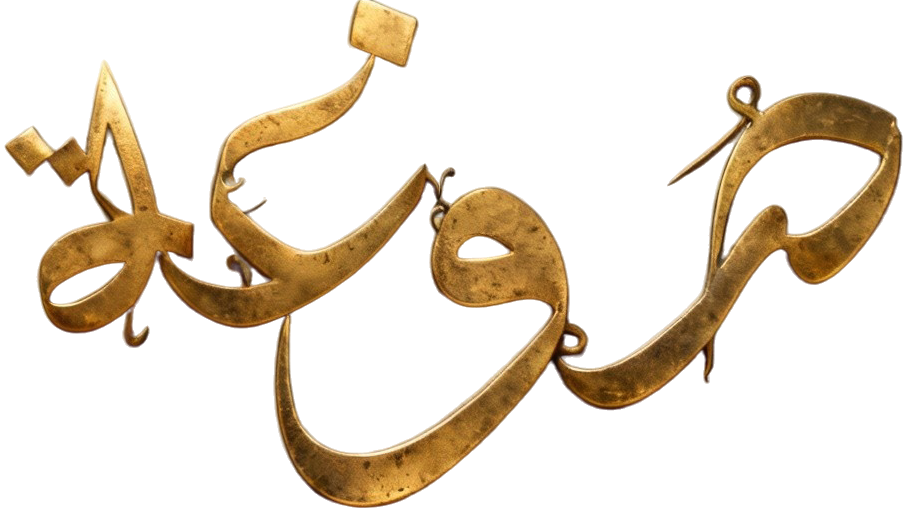
The Measure draws on the measured logic of Arabic calligraphy, where proportion, balance, and disciplined construction establish the conditions for variation and freedom. Letterforms are selected for their linguistic and visual resonance within the name of each emirate, while the principle of measure extends beyond the letter itself.
In this reading, the Emirates offer a corresponding structure: distinct identities retaining their individual character within a shared framework. Coherence emerges through alignment rather than uniformity, allowing difference to remain active within the whole.
The two systems are connected by method rather than appearance, giving each emirate room to develop its own form, material language, and presence.
PRESENCE
SOGHA is conceived to operate across different scales, from civic monuments and art installations to interiors, lighting, textiles, jewelry, and everyday objects.
Moving between these scales tests the continuity of each visual system as its material, function, and physical setting change.
What remains constant is the structural relationship between form and place: each application can change in scale and material while remaining traceable to the context from which it was developed.